
From the kitchen · February 6, 2024 · By Chef Dee Okafor
Dee's brown-butter johnnycakes
We get asked for this recipe at least once a day, and in October about once an hour. Here it is, scaled down from the 6 am breakfast batch to something that fits in your kitchen.
The first thing I changed when I came to the Crane & Lantern House in 2019 was the pancakes. Theo had a perfectly good buttermilk pancake on the breakfast menu, and I told him, politely, that a house this old in a place this New England deserved a johnnycake. He's from Providence. He did not need much convincing.
A johnnycake is about as old a food as there is on this coast: cornmeal, water or milk, salt, cooked on a hot griddle in fat. The Narragansett people were making corn cakes here long before any captain built a house on Mercy Lane, and Rhode Islanders still argue about the right meal, the right thickness and whether milk is allowed. I'm not getting into that argument. What I can tell you is that the version we make has three things that matter: a fine stone-ground cornmeal scalded with boiling water so it softens before it hits the pan, a rest so the meal can drink, and brown butter, both in the batter and in the pan.
My grandmother made a corn cake in her kitchen in Lagos that wasn't so different, a little sweeter, fried in palm oil, eaten hot with pepper. Corn is a long road between New England and West Africa, and this recipe sits somewhere in the middle of it. The maple and sea salt are pure Salem breakfast.
- Makes
- About 12 johnnycakes (serves 4)
- Hands-on time
- 30 minutes
- Rest
- 15 minutes
- Difficulty
- Easy, once you get the griddle heat right
Ingredients
For the brown butter
- 8 tablespoons (1 stick, 113 g) unsalted butter
For the batter
- 1 cup (150 g) fine stone-ground white or yellow cornmeal (white flint meal if you can find it)
- 1 teaspoon fine sea salt
- 1 tablespoon light brown sugar
- 1 cup (240 ml) boiling water
- ½ to ¾ cup (120–180 ml) whole milk, at room temperature
- 1 large egg (optional; it makes a slightly lighter, less crisp cake)
- ¼ teaspoon freshly grated nutmeg
To serve
- Warm maple syrup, the darkest you can get
- Flaky sea salt
- A spoonful of the reserved brown butter
Method
- Brown the butter. Melt the butter in a small light-colored saucepan over medium heat. It will foam, then go quiet. Keep swirling. After 4 to 6 minutes the milk solids at the bottom will turn a deep hazelnut brown and it will smell like toffee. Pour it straight into a heatproof bowl so it stops cooking, scraping in all the brown bits. Those bits are the point. Set aside 2 tablespoons for serving.
- Scald the meal. In a mixing bowl, whisk together the cornmeal, salt, brown sugar and nutmeg. Pour the boiling water over it all at once and stir hard with a wooden spoon until there are no dry spots. It will look like thick porridge. This softens the meal so your cakes are tender inside instead of gritty.
- Loosen the batter. Stir in 3 tablespoons of the brown butter, then the egg, if you're using it. Add the milk a little at a time until the batter is about as thick as heavy cream: it should spread slowly on its own when you drop a spoonful, not run. You may not need all the milk.
- Rest it. Cover the bowl and leave it for 15 minutes. The meal keeps absorbing liquid, and the batter will thicken. Stir in another splash of milk if it has gone stiff.
- Heat the griddle. Heat a cast-iron griddle or heavy skillet over medium heat for a good 5 minutes. Brush it with a little of the remaining brown butter. It should sizzle, not smoke.
- Cook. Drop the batter by heaping tablespoons, about 3 inches across, leaving room between them. Leave them alone for 4 to 5 minutes, until the edges are lacy and deep golden and the tops look set. Johnnycakes cook slower than pancakes, and you will want to flip them early. Don't.
- Flip and finish. Brush the tops with a little more brown butter, flip, and cook another 3 to 4 minutes until crisp on the second side. Keep finished cakes warm in a low oven (200°F) on a rack, not a plate, so they stay crisp.
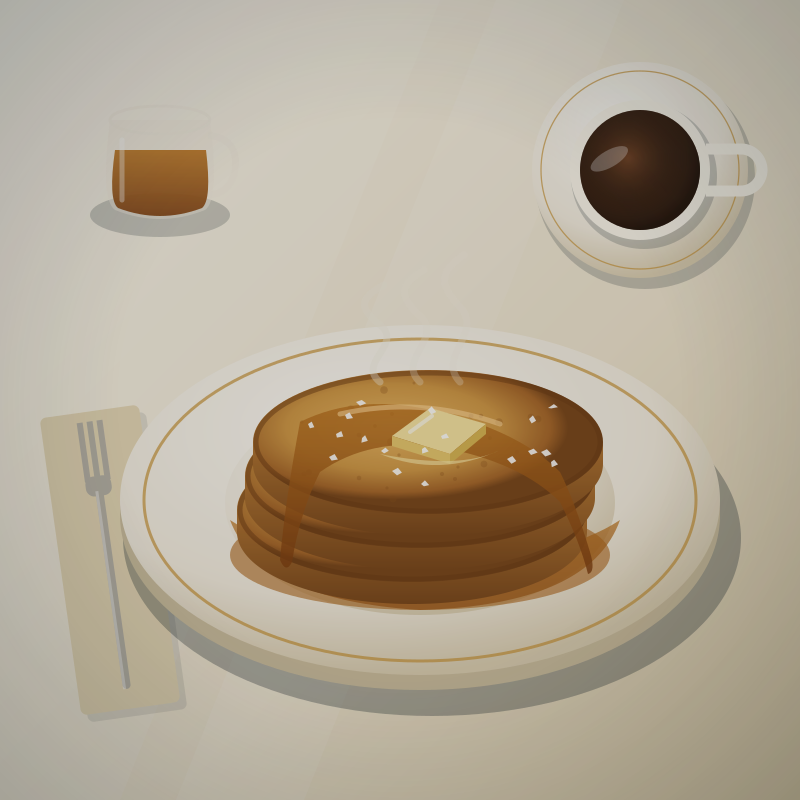
- Serve. Three to a plate. Spoon over the reserved brown butter, pour on the warm maple, and finish with a pinch of flaky salt. Eat immediately.
Notes from the kitchen
- The meal matters. Fine stone-ground meal gives you a creamy inside and a lacy edge. Coarse polenta-style meal will be gritty, and instant cornmeal won't hold together.
- Thin or thick? For thin, crisp cakes (the old Rhode Island "west of the bay" style) add more milk until the batter is pourable. For thicker cakes, use less. We make ours in the middle.
- Make it ahead. The scalded batter keeps, covered, in the fridge overnight. Loosen it with milk in the morning; it'll be thicker than you remember.
- Make it savory. Skip the sugar and nutmeg, add chopped scallion and a pinch of cayenne, and serve with smoked bluefish and crème fraîche. That's the version on our lunch menu in winter.
- Gluten-free? Yes, as long as your cornmeal is milled in a gluten-free facility. Check the bag.
If yours don't come out quite like ours, come and have some. Breakfast in the Lantern Room is included for inn guests every morning and open to the public Wednesday through Sunday, 7:30 to 11:00 am, no reservations. On October weekends, "early" means about 7:15.
— Dee