

The downtown loop
From Mercy Lane to the pedestrian streets downtown, past the memorial and the old burying ground, through the Common and home along the harbor. About two miles, mostly flat, endlessly interruptible.
Around Salem
Almost everything worth seeing in Salem is within a twenty-minute walk of our front door. Here is how we'd spend a few days, from the people who live here year round.

Salem is a port town first. Long before it became known as the Witch City, it was one of the richest harbors in the young United States, sending ships to the West Indies, Europe and, after the Revolution, to the far side of the world: Canton, Bombay, the Isle of France and the pepper coast of Sumatra, where Captain Nathaniel Crane made his fortune and, in 1801, lost his life. The wealth of those voyages built the Federal mansions, the wharves and the museums you'll see today. The city's seal still shows a ship and a Sumatran merchant beneath a Latin motto about the farthest ports of the East.
Salem is also the place where, in 1692 and 1693, more than a hundred and fifty people were accused of witchcraft and twenty were executed. Today the city remembers them with memorials and serious museums, alongside a cheerful, sometimes over-the-top Halloween culture and a real, living community of witches and pagans who call Salem home. All of these things are true at once. The best visits make room for all of them.
A note before you start: Salem is compact, flat and best on foot. Leave the car with us, pick up a printed map at the front desk (Samuel draws on it), and go.
About eight minutes' walk from Mercy Lane, down toward the harbor, you'll reach the old waterfront, where the city's maritime history is preserved as a national historic site. Walk out along the long stone wharves that once held warehouses full of pepper, tea, sugar and silk, and imagine the place in 1800, when forty ships might be in port at once. There's a replica tall ship that is often open for visitors in season, restored warehouses, a West India goods store, and the handsome brick Custom House, where a young customs official named Nathaniel Hawthorne once worked (and later set the opening of a rather famous novel).
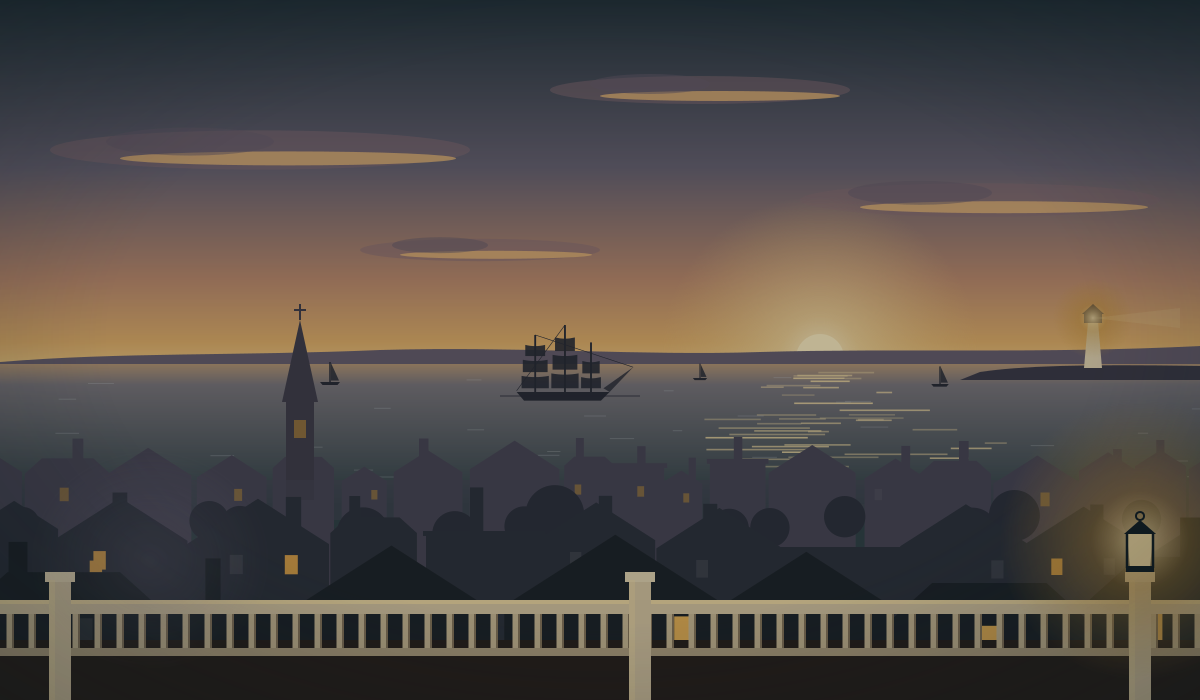
The park rangers give excellent free talks in season. Even if you skip the buildings, walk to the end of the longest wharf at sunset and look back at the city. It's our favorite view in Salem that isn't from our own widow's walk.
From the waterfront, a pleasant walk east along the water takes you to the old seaside neighborhood around the House of the Seven Gables, the 1668 mansion that inspired Hawthorne's novel, with its gardens on the harbor. Plan an hour or two if you go inside.
Salem has one of the finest collections of early American houses anywhere, and you can see most of it for free from the sidewalk.
Architecture enthusiasts should also take Samuel's Thursday history talk, which explains how a Georgian house like ours, built in 1748, was enlarged in the 1790s in the Federal style, and how to tell the two apart by the windows alone.
Salem's great downtown museum of art and culture began, fittingly for a captain's house, as the cabinet of curiosities of a society of Salem sea captains founded in 1799. To join, you had to have sailed around Cape Horn or the Cape of Good Hope. Their collection of objects brought back from Asia, Africa, the Pacific and beyond grew into one of the oldest continuously operating museums in the country. Today it's a vast, beautiful place with maritime art, Asian export art, contemporary work, and a whole house moved from China and rebuilt inside. You could spend a day; most people spend half of one and wish they'd stayed longer. Plan on timed tickets in October.
The city also has several small museums devoted to the witch trials, to its maritime history and to its literary past, and a number of historic houses open seasonally for tours. Hours change through the year, so check before you go; we keep current leaflets in the front hall.
Salem's colonial burying grounds are among the oldest in the country, and they are quiet, moving places to walk. The oldest, near downtown, dates to 1637; its slate headstones are carved with winged skulls, hourglasses and verses, and among those buried there is one of the judges of 1692. Other old grounds lie a short walk away, each with its own character and its own long-told stories.
Please treat them as what they are: cemeteries, with real people buried in them, some of whose descendants still live nearby. Stay on the paths, don't lean on or touch the stones (old slate is fragile, and rubbings are not permitted), and visit in daylight. Some grounds close at dusk and some have limited access in October to protect them from crowds.
We're often asked where to learn about the witch trials. Our house was built in 1748, more than half a century after them, and has no connection to the events, but we think every visitor to Salem should spend some time with this history.
Begin at the Salem Witch Trials Memorial downtown, dedicated in 1992 for the tercentenary, beside the old burying ground. It is a simple, quiet stone enclosure with granite benches, each carved with the name of one of the twenty people executed and the date and manner of their death. Visitors leave flowers. It is not a photo spot. Then visit Proctor's Ledge, the site confirmed by historians in 2016 as the place of the hangings, now marked by a small memorial. It's a residential street; please be quiet and respectful.
Much of the story actually took place in what was then Salem Village, now the separate town of Danvers, a short drive northwest, where some sites from 1692 survive. Several of Salem's museums tell the history seriously and well. Samuel can recommend which, depending on how much time you have and whether you are traveling with children.
From Mercy Lane to the pedestrian streets downtown, past the memorial and the old burying ground, through the Common and home along the harbor. About two miles, mostly flat, endlessly interruptible.

Samuel's architecture walk: our lane, the streets around the Common, then west to Chestnut Street and the Federal mansions. Bring the printed map; he's marked the best doorways.

Borrow one of our six bikes and ride east past the wharves to the harbor's edge, the old fort grounds and the seaside parks at the end of the point, with views to the islands and lighthouses. Bring a picnic.
In season (roughly May to October), several harbor cruises leave from the waterfront: short sightseeing trips around the harbor, sunset sails, lighthouse cruises, and, in late summer and fall, the occasional evening "spooky" cruise. Most leave from near the wharves and last an hour or two. The seasonal ferry to and from Boston is also a fine excursion in its own right: about an hour each way across the harbor, with Boston's skyline coming up out of the water at the end. Spend a day in the city and come home for dinner.
If you'd rather be on the water under your own power, ask us about kayaking in the calmer parts of the harbor; the front desk can point you in the right direction.
Spring is the city's best-kept secret: magnolias on Chestnut Street, quiet museums, the harbor coming back to life, and rates at their lowest. Summer brings the ferry, harbor cruises, outdoor dining on our garden terrace and long evenings on the water. October is its own season; please read our October guide. November is golden and calm, the ghost walks still run until the end of the month, and the restaurant is cozy. Winter is for the fireplaces, the Library, Dee's chowder and the occasional snowy walk through a city that has, for a few months, almost all to itself.
We don't have partnerships with any attractions, tours or restaurants in town, and we don't take commissions. Our suggestions are just that: suggestions, from people who like it here. Opening hours and seasons change; please check with each place before you go.